



Busy? Listen to this blog instead.
For many companies, workforce disruptions are becoming harder to anticipate. Labor negotiations, shifting workforce expectations, and external crises have created a more unpredictable labor environment than in the past.
With how much operations today rely on following processes, even a temporary disruption at one point can quickly ripple to impact production schedules, customer deadlines, and overall operational stability.
Here’s how labor disruptions are evolving and how employers can prepare for them.
How Are Labor Disruptions Evolving?
Labor disruptions today often look different than they did in the past. Instead of a single predictable trigger, companies are navigating a combination of workforce shifts, economic changes, and technological transformation.
Some of the most common modern labor disruptions include:
Technological Change and Workforce Adjustments
Technology has always influenced how work gets done, and recent advances in automation and artificial intelligence are accelerating that change.
As companies introduce new technologies, job responsibilities often evolve. Some roles become more technical, others require retraining, and some positions change entirely. These transitions can create uncertainty for workers and organizations alike, especially when employees are asked to adapt to new systems or workflows.
When technological change happens quickly, it can also influence labor negotiations or workforce expectations around training, job security, and working conditions.
Demographic Shifts in the Workforce
According to Purdue Global, there are five generations in the workplace currently, all with different values and priorities. The workforce itself is also changing. Many experienced manufacturing and skilled trade workers are reaching retirement age, while younger generations are entering the workforce with different career paths and expectations.
This shift is not simply about “loyalty” or work ethic. Many younger workers are navigating a labor market that encourages mobility, skills development, and career advancement across multiple employers. At the same time, fewer workers are entering manufacturing and skilled trades compared to previous decades.
For employers, this creates a more competitive hiring environment and can make staffing levels less predictable.
Related Content: The Hidden Cost of Staffing Gaps
External Economic and Market Forces
Employers are also navigating a broader set of external pressures that can influence labor availability. Global events, economic policy shifts, supply chain disruptions, and sudden changes in market demand can all reshape hiring conditions with little warning.
Trade policy adjustments, international conflicts, and economic uncertainty can ripple through manufacturing and logistics industries, affecting production schedules, material costs, and workforce needs.
Events like the COVID-19 pandemic also demonstrated how quickly labor markets can shift. Entire industries slowed or stopped, while others experienced sudden surges in demand. In many cases, employers had to adapt their staffing strategies almost overnight.
Because these external factors are largely outside a company’s control, they add another layer of unpredictability to workforce planning.
How Employers Stay Covered During a Labor Disruption
The best way for employers to stay covered during a labor crisis or staffing disruption is to focus on contingency planning and workforce coverage. Whether you’re left dealing with a strike staffing situation, abrupt supply and demand surges, or something new and unpredicted, it’s important to have a labor continuity plan.
1. Identify Critical Roles and Operational Dependencies
The first step in protecting your operations is understanding which parts of your workforce are essential to keeping production running.
Every facility has roles that cannot be left uncovered for long. These may include machine operators, maintenance technicians, quality control staff, supervisors, or logistics personnel. A continuity plan identifies these positions ahead of time and outlines how they will be staffed if the regular workforce becomes unavailable.
Employers should also look beyond job titles and identify other operational dependencies such as equipment operators, materials & supply planning, safety oversight, training requirements, and production workflow. Understanding these dependencies helps companies plan more effectively for workforce disruptions.
2. Assess Potential Labor Risks
Once critical roles are identified, the next step is evaluating what types of events could disrupt those positions.
Labor strikes, contract negotiations, sudden workforce shortages, supply chain issues, or external economic changes can all impact staffing availability. Companies should evaluate which scenarios are most likely to affect their operations and how severe the impact could be.
This step often requires input from multiple departments including operations leaders, HR, and facility managers. An important note: look at the operational impacts, not just the scenarios. You’ll want to focus more on the potential impacts. Examples include:
- Temporarily losing a percentage of your current workforce
- Permanently or temporarily losing key employees
- Loss of machines, complete power outages, and being cut off from your software
- Supplier shutdown, breaks in the supply chain, and logistical hiccups
- Crisis that would make on-site work at one or more locations impossible
By identifying potential risks ahead of time, companies can build contingency plans that address the most likely disruption scenarios.
3. Establish a Workforce Contingency Plan
After identifying risks, companies can develop a structured plan for maintaining staffing levels if disruptions occur. A workforce contingency plan outlines how operations will continue if part of the regular workforce becomes unavailable.
This plan typically defines which roles must be filled first to keep production moving, how quickly replacement workers may be needed, and what onboarding or safety requirements temporary personnel must complete before starting work. Many companies also establish internal communication plans so leadership teams know exactly how to respond if a disruption begins.
For many employers, working with a contingency staffing partner is an important part of building this strategy. Strom Engineering works with employers to develop workforce continuity plans before disruptions occur, helping identify critical roles, evaluate staffing risks, and prepare deployment strategies for temporary workforce support.
By planning ahead, Strom can recruit, screen, and prepare qualified workers who are ready to deploy if a disruption happens. Strom also assists with onboarding coordination, safety orientation, and workforce management to help employers maintain production during challenging staffing situations.
With a structured contingency strategy in place, managers have a clear playbook to follow instead of making staffing decisions under pressure.
4. Prepare for Rapid Workforce Deployment
In many labor disruption scenarios, timing is critical. Companies that prepare ahead of time are able to mobilize temporary staffing support quickly when needed.
Pre-deployment planning may include preparing training materials, documenting job processes, reviewing safety procedures, and ensuring replacement workers understand operational expectations before arriving on site.
Stay Covered During Labor Disruptions
Companies can’t control every disruption that affects the labor market. But with the right contingency planning strategy in place, they can ensure their operations remain stable even when workforce challenges arise.
Free Guide: How to Create a Crisis Plan
Learn How To Create A Strike & Crisis Plan
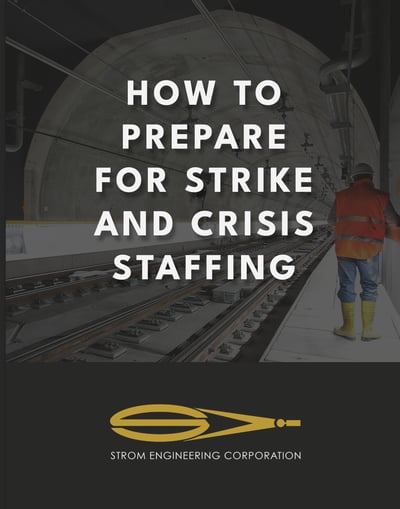 Strikes and crises can happen, and when they do, preparations and planning are critical. Labor disputes can have a significant impact on operations, production, and overall business revenue, so it’s important to understand what to do and when to do it.
Strom Engineering is a complete solution provider and partner for businesses seeking to address the unfortunate possibility of a labor disruption.
Strom suggests a five-phase approach for mitigating the repercussions of a labor disruption. Download our free ebook to learn more! This guide includes:
- A walkthrough on how to create a strike and staffing plan.
- The benefits of working with a strike and crisis staffing agency
- What to look for when choosing a strike and staffing agency
- What it's like working with Strom as your strike and staffing agency
Strom Engineering is a national staffing and recruitment agency, with a particular focus on manufacturing, engineering, assembly, and other trade positions. We match skilled candidates to temporary or project staffing positions. Learn more about how it works and check out our case studies for more information.